
Search for “aroma oil” on any Indian shopping site and you will find hundreds of small bottles for a few hundred rupees: rose, sandalwood, jasmine, lavender, all at the same price. Then you see a single bottle of sandalwood essential oil costing several thousand rupees and wonder why. This guide explains what aroma oil actually is and how to tell it apart from a pure essential oil.
Quick answer
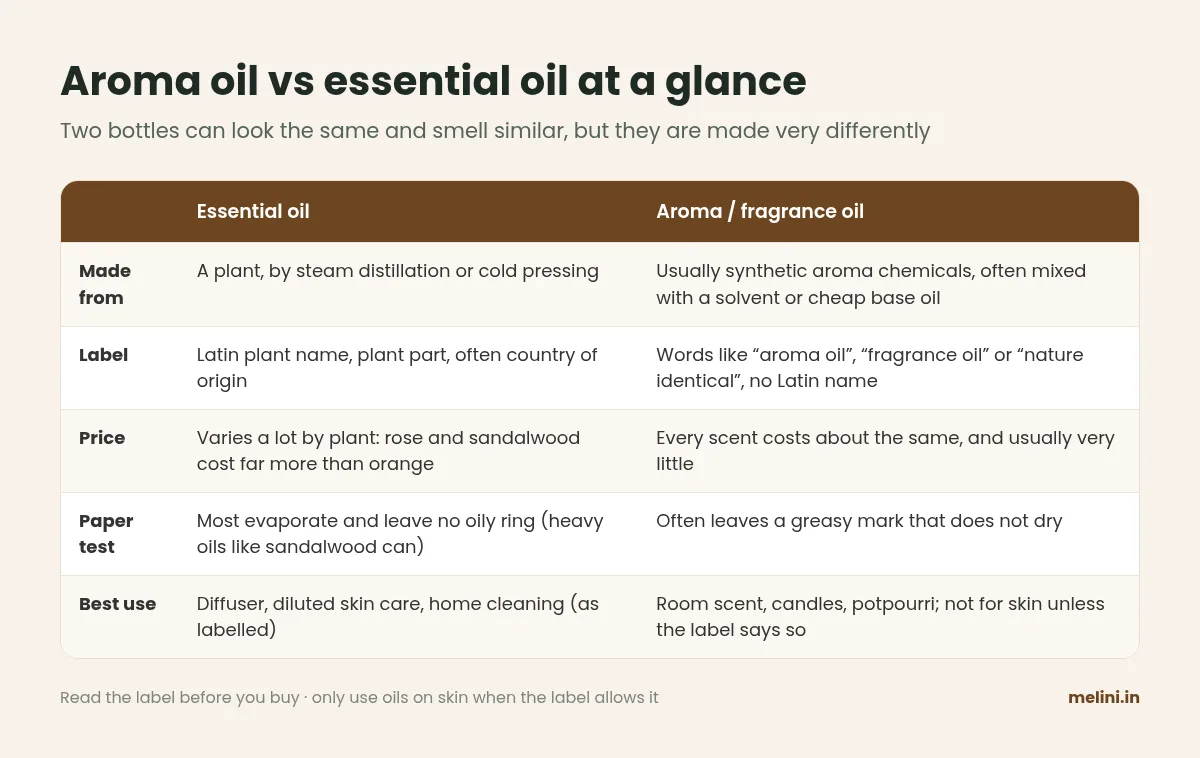
“Aroma oil” is not a standard term. On most Indian labels it means a fragrance oil: synthetic aroma chemicals, often mixed into a solvent or a cheap base oil, made to smell like a plant. An essential oil is the concentrated aromatic compounds of one plant, made by steam distillation or cold pressing, and labelled with the plant’s Latin name. Aroma oils are fine for room fragrance and candles; for skin care and aromatherapy, choose a pure essential oil.
Aroma oil meaning
When sellers say aroma oil, they usually mean one of three things:
- Fragrance oil: lab-made scent compounds, sometimes with a little natural material. This is the most common meaning.
- A diluted essential oil: a small amount of essential oil in a carrier oil, sold as a ready-to-use “aroma” or “aromatherapy” oil. This can be fine if the label says exactly what is inside and in what amount.
- A blend of both: some essential oil mixed with fragrance oil to keep the price low.
Because the word has no fixed meaning, the only way to know is to read the label.
What is an essential oil?
An essential oil is the volatile aromatic part of a plant. Most are steam-distilled from leaves, flowers, bark or roots; citrus oils are cold-pressed from the peel. It takes a lot of plant material to make a small bottle, which is why prices vary so much from oil to oil. For a deeper comparison, see our article on essential oil vs fragrance oil.
How to read the label
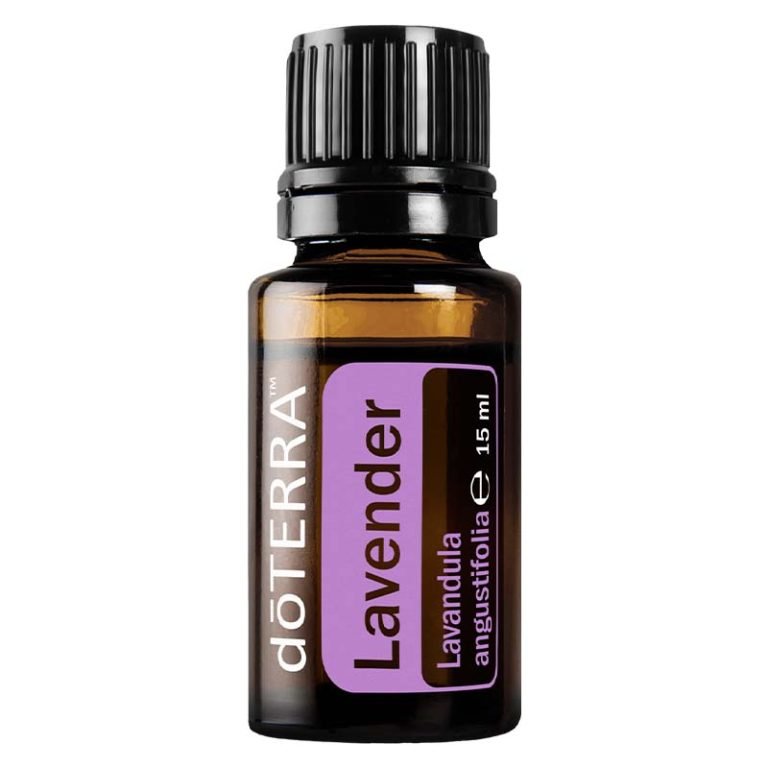
- Latin name: a real essential oil names the plant, for example Lavandula angustifolia or Santalum album.
- Plant part and method: “flowers, steam distilled” or “peel, cold pressed”.
- One ingredient: a single oil should list one ingredient. Words like “parfum”, “fragrance”, “nature identical” or “aroma compound” point to a fragrance oil.
- Directions: check whether the label allows skin use. Many aroma oils are for diffusers or burners only.
The price clue
Plants give very different amounts of oil. Sandalwood heartwood, rose petals and melissa leaves give tiny amounts, so their oils are expensive. Orange peel gives a lot, so orange oil is cheap. If every scent in a range costs the same, they are almost certainly fragrance oils.
The paper test
Put one drop on plain white paper and leave it for a few hours. Most light essential oils evaporate and leave little or no oily ring. Many fragrance oils, and oils diluted in a carrier, leave a greasy mark. Heavy essential oils like sandalwood, vetiver or patchouli can leave a mark too, so use this only as one clue. Here is our full guide to the essential oil paper test.
Which one should you buy?
| You want | Choose |
|---|---|
| A pleasant room scent, candles, potpourri | Aroma or fragrance oil is fine |
| Aromatherapy in a diffuser | Pure essential oil |
| Diluted massage, face or hair oil | Pure essential oil plus a carrier oil |
| A gift that feels special | Pure essential oil or a kit |
If you are new to essential oils, our aromatherapy guide is a good place to start, and the gift ideas page has sets for every budget.
Frequently Asked Questions
What does aroma oil mean?
It is a loose marketing term. Most often it means a fragrance oil made with synthetic aroma chemicals. Sometimes it means an essential oil diluted in a carrier oil. Read the label to be sure.
Is aroma oil the same as essential oil?
Usually not. An essential oil comes from one plant and names it in Latin on the label. Most aroma oils are fragrance oils.
Can I use aroma oil on my skin?
Only if the label clearly says it is made for skin use. Many aroma oils are for diffusers and burners only.
Can I put aroma oil in an essential oil diffuser?
Check your diffuser manual. Thick or synthetic oils can clog or damage ultrasonic diffusers, and some brands void the warranty.
Why is essential oil more expensive than aroma oil?
Because it takes a lot of plant material to make a small amount of essential oil, while fragrance chemicals are cheap to produce.
Disclaimer: This information is for educational purposes only and is not medical advice. Consult a healthcare professional before using essential oils if you are pregnant, breastfeeding or under medical care. dōTERRA products are not intended to diagnose, treat, cure, or prevent any disease.
Recommended Products
Related articles
doTERRA On Guard vs Air (Breathe): Choosing Your Protective Blend
Layering and Blending Essential Oils Like a Pro
Understanding doTERRA: CPTG Quality and Its Importance
Essential Oil vs Fragrance Oil: Key Differences Explained
Was this article helpful?

Written by
Pete — Nourished by Pete
After struggling for more than 20 years with eczema, allergies and health challenges no doctor could fully explain, Pete found his answers in the foundations of health. Today he helps people create simple, sustainable changes that improve energy, sleep, digestion, stress resilience and overall wellbeing.