

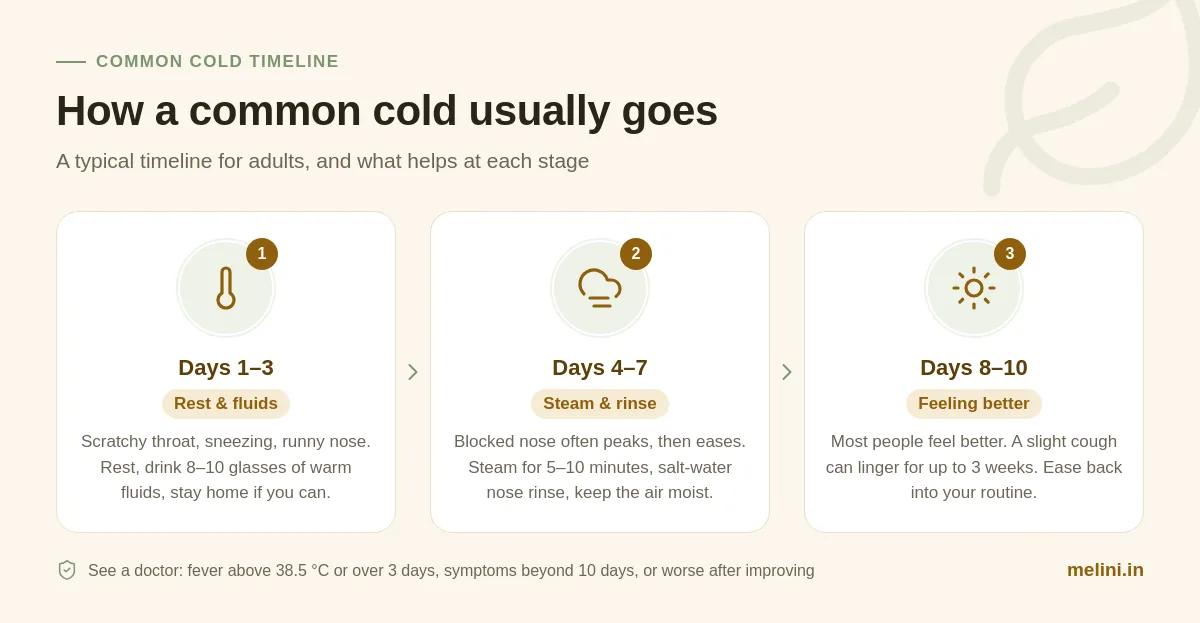
In short: a common cold is a mild viral infection of the nose and throat. It usually clears on its own in 7 to 10 days. Antibiotics do not work against cold viruses. What helps is giving your body the right conditions to recover: rest, plenty of fluids, moist air and a clear nose. Below is the routine I recommend, step by step.
What causes a common cold?
- Viruses. More than 200 viruses can cause a cold, most often rhinoviruses. They spread through droplets and hands that touch the eyes, nose or mouth.
- Close contact indoors. In winter we spend more time in closed rooms, buses and offices, so viruses pass more easily.
- Dry air and pollution. Dry winter air and high AQI days in many Indian cities dry out and irritate the lining of the nose, which makes it easier to catch a cold and harder to breathe through a blocked nose.
- Low reserves. Short sleep, stress and skipped meals make colds more likely and slower to clear.
A blocked nose happens because the blood vessels inside the nose swell and produce extra mucus as the body fights the virus.
What helps at home: step by step
- Rest for the first two or three days. Your body recovers faster when you are not pushing through. If you can, work from home so you do not pass the cold on.
- Drink more than usual. Aim for 8 to 10 glasses of fluid a day: warm water, clear soups such as rasam or vegetable broth, and herbal teas such as ginger or tulsi tea. Warm fluids loosen mucus and soothe the throat.
- Use steam carefully. Sit with a bowl of hot (not boiling) water, a towel over your head, and breathe slowly for 5 to 10 minutes. A hot shower works too. Keep children away from bowls of hot water because of the burn risk.
- Rinse your nose with salt water. A saline spray or rinse from the chemist, or boiled and cooled water with a quarter teaspoon of salt in a cup, clears mucus gently. Always use boiled or sterile water.
- Keep the air moist. In heated or air-conditioned rooms, a humidifier, a bowl of water near a heater, or drying clothes indoors adds moisture. Air the room for a few minutes twice a day.
- Sleep with your head raised. An extra pillow helps mucus drain and makes a blocked nose easier at night. Keep screens off for the last hour before bed so you fall asleep more easily.
- Blow gently, one side at a time. Hard blowing can push mucus into the ears and sinuses. Use soft tissues and a little petroleum jelly around the nostrils if the skin gets sore.
- Eat simple, warm meals. Khichdi, dal, soups, fruit and vegetables give your body what it needs. Appetite often returns after a few days.
- Wash your hands and cover coughs. This protects your family and colleagues. Wear a mask in crowded places while you are sneezing.
- Skip smoking and alcohol. Both irritate the nose and throat and slow recovery.
If you use over-the-counter cold medicines, ask your pharmacist which one suits you, and do not combine several products that contain the same ingredient. Decongestant nasal sprays should not be used for more than 3 days in a row.
Frequently Asked Questions
How long does a common cold last?
Most colds improve within a week and are gone in 10 days. A slight cough can linger for up to 3 weeks.
Is it a cold or the flu?
A cold starts slowly with a runny or blocked nose and sneezing. Flu usually starts suddenly with high fever, body aches and strong tiredness. If you think it is flu, see a doctor, especially if you are older or have a long-term condition.
Do antibiotics help a cold?
No. Colds are caused by viruses, and antibiotics only work on bacteria. Taking them without need can cause side effects and resistance.
How can I open a blocked nose quickly at night?
Try a warm shower or steam before bed, a saline rinse, and an extra pillow. Keep the bedroom air from getting too dry.
Should I eat cold foods or curd when I have a cold?
There is no strong evidence that curd or cold foods make a cold worse. Warm drinks and soups simply feel more soothing, so choose what you enjoy.
When to see a doctor
See a doctor if:
- your fever is above 38.5 °C (101.3 °F), or any fever lasts more than 3 days;
- you feel short of breath, wheezy, or have chest pain;
- symptoms last more than 10 days, or get worse after starting to improve;
- you have strong pain in the face, forehead or ears;
- the person who is ill is over 65, or has diabetes, asthma, a heart condition or a weak immune system;
- you are unsure or worried.
Call 112 for emergency help if someone has severe difficulty breathing, blue lips, or is confused or very drowsy.
For simple ways to make winter evenings at home calmer and cosier, see this winter evening ritual at home.
This article is general information, not medical advice. Please talk to your doctor about your own health.
Related articles




Was this article helpful?

Written by
Pete — Nourished by Pete
After struggling for more than 20 years with eczema, allergies and health challenges no doctor could fully explain, Pete found his answers in the foundations of health. Today he helps people create simple, sustainable changes that improve energy, sleep, digestion, stress resilience and overall wellbeing.