
In short: in winter the air holds less moisture, and hot baths, heaters and harsh soaps strip the skin's natural oils. The result is tight, rough, flaky or itchy skin, most often on the legs, hands, elbows and face. For most people, a few daily habits fix it within one to two weeks. I recommend focusing on three things: wash more gently, moisturise at the right moment, and keep moisture in the air and in your body.
Common causes
- Low humidity in winter, especially in North India, and indoor heaters or air conditioning.
- Long, hot baths and showers, which wash away the skin's protective oils.
- Harsh soaps and detergents, including strongly scented soaps and dish-washing liquids on bare hands.
- Not drinking enough, which is common in winter because we feel less thirsty.
- Age. Skin produces less oil as we get older.
- Frequent hand washing and sanitiser use.
- Some skin conditions such as eczema or psoriasis, and some medical conditions, which need a doctor's advice.
Daily care: step by step
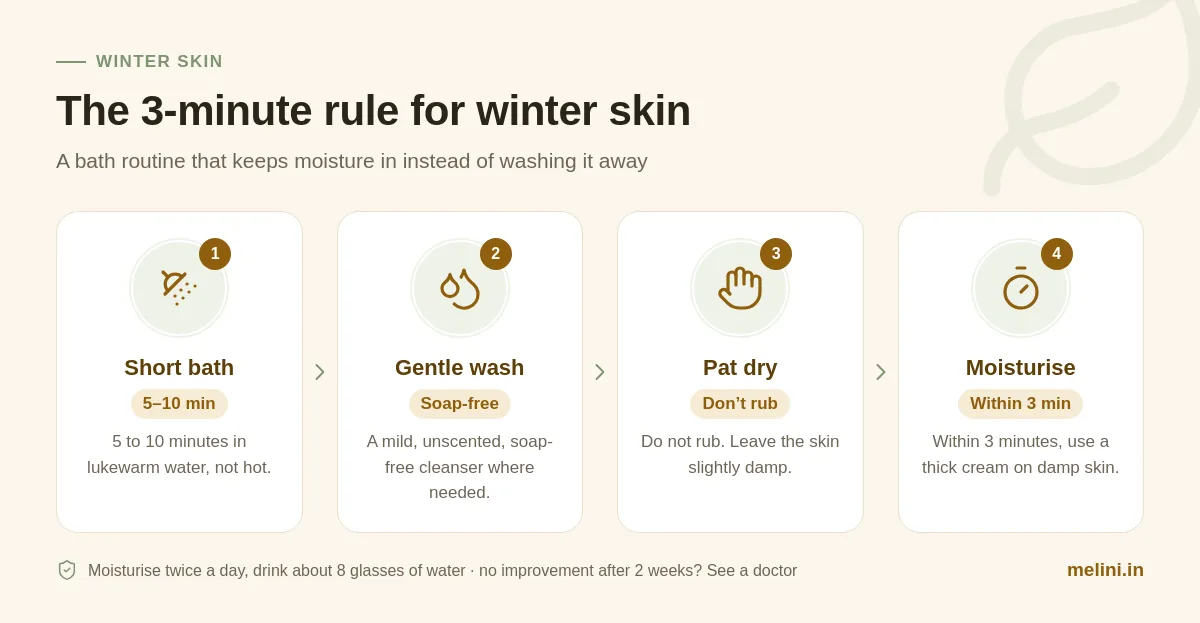
- Keep baths short and lukewarm. Five to ten minutes in warm, not hot, water is enough. If you use a bucket bath, mix the water so it feels just warm on your wrist.
- Use a gentle, unscented cleanser. Soap-free or mild cleansers are kinder to dry skin. You do not need soap on every part of the body every day.
- Pat dry, do not rub. Leave the skin slightly damp.
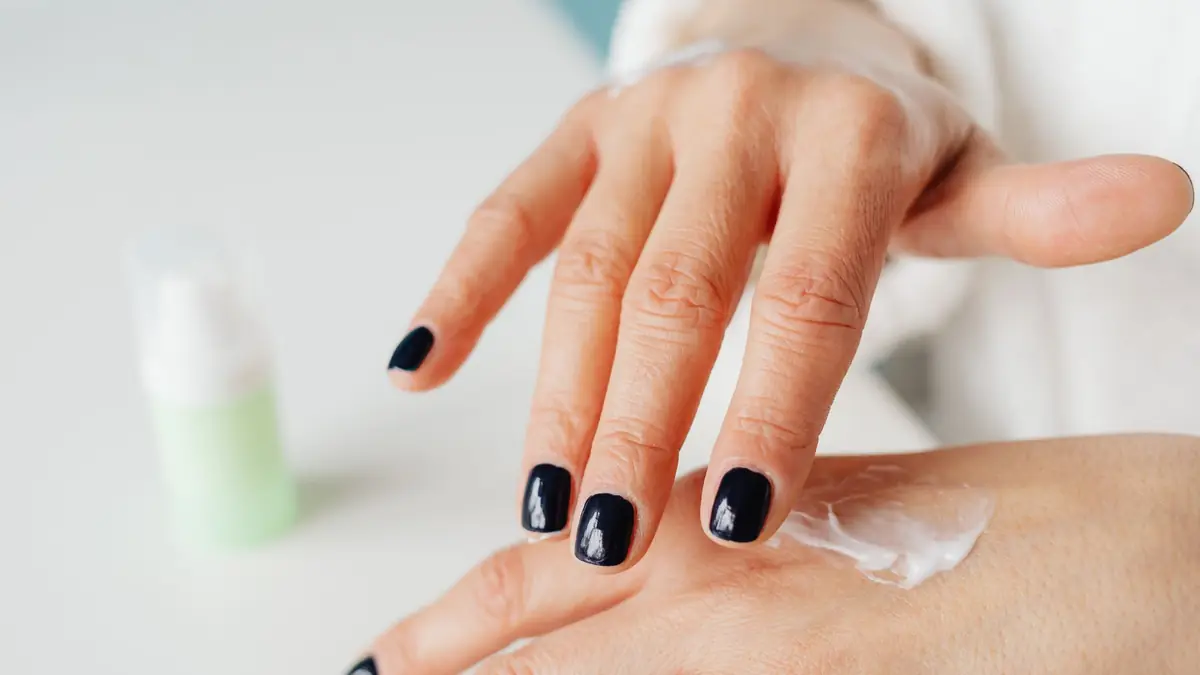
- Moisturise within three minutes. Apply a moisturiser to damp skin straight after bathing to lock the water in. Thicker creams and ointments work better than light lotions in winter. Plain coconut oil, which many Indian homes already use, also works well on the body.
- Moisturise hands after every wash. Keep a small tube by the sink and in your bag.
- Add moisture to the air. Use a humidifier in the bedroom, or place a bowl of water near a heater. Keep heaters at a moderate setting.
- Drink enough water. Aim for 8 glasses a day, more if you are active. Warm water, soups and herbal teas count.
- Eat healthy fats. Nuts, seeds, ghee in moderation, fish and green leafy vegetables support skin from inside.
- Protect skin outdoors. Cover hands and face on cold, windy days, and use sunscreen on exposed skin: winter sun still dries and damages skin.
- Choose soft fabrics. Cotton next to the skin is gentler than wool, which can itch. Wash clothes with a mild detergent and rinse well.
- Care for your lips. Use a plain lip balm, and avoid licking your lips, which dries them more.
Frequently Asked Questions
How can I cure very dry skin quickly?
The fastest improvement usually comes from moisturising damp skin twice a day with a thick cream and switching to short, lukewarm baths. Most people see a difference within a week.
Is coconut oil good for dry skin?
Coconut oil works well as a body moisturiser for many people when applied to damp skin. On the face it can block pores in some people, so test it on a small area first.
Should I drink more water if my skin is dry?
Drinking enough water supports your overall health, but it will not fix dry skin on its own. Combine it with gentle washing and regular moisturising.
Why are my heels cracking in winter?
Heel skin is thick and dries out easily. Soak feet in warm water for 10 minutes, gently use a pumice stone, apply a thick cream and wear socks at night.
When to see a doctor
See a doctor or dermatologist if:
- the skin cracks deeply or bleeds;
- you see signs of infection: redness that spreads, warmth, pus or swelling;
- itching is so strong that it keeps you awake or makes you scratch until the skin breaks;
- you have red, scaly or thickened patches, or a rash;
- the dryness does not improve after two weeks of good daily care;
- your skin is very dry all year round, or the dryness came with other new symptoms such as tiredness or weight change.
For simple ways to make winter evenings at home calmer and cosier, see this winter evening ritual at home.
This article is general information, not medical advice. Please talk to your doctor about your own health.
Related articles




Was this article helpful?

Written by
Pete — Nourished by Pete
After struggling for more than 20 years with eczema, allergies and health challenges no doctor could fully explain, Pete found his answers in the foundations of health. Today he helps people create simple, sustainable changes that improve energy, sleep, digestion, stress resilience and overall wellbeing.