

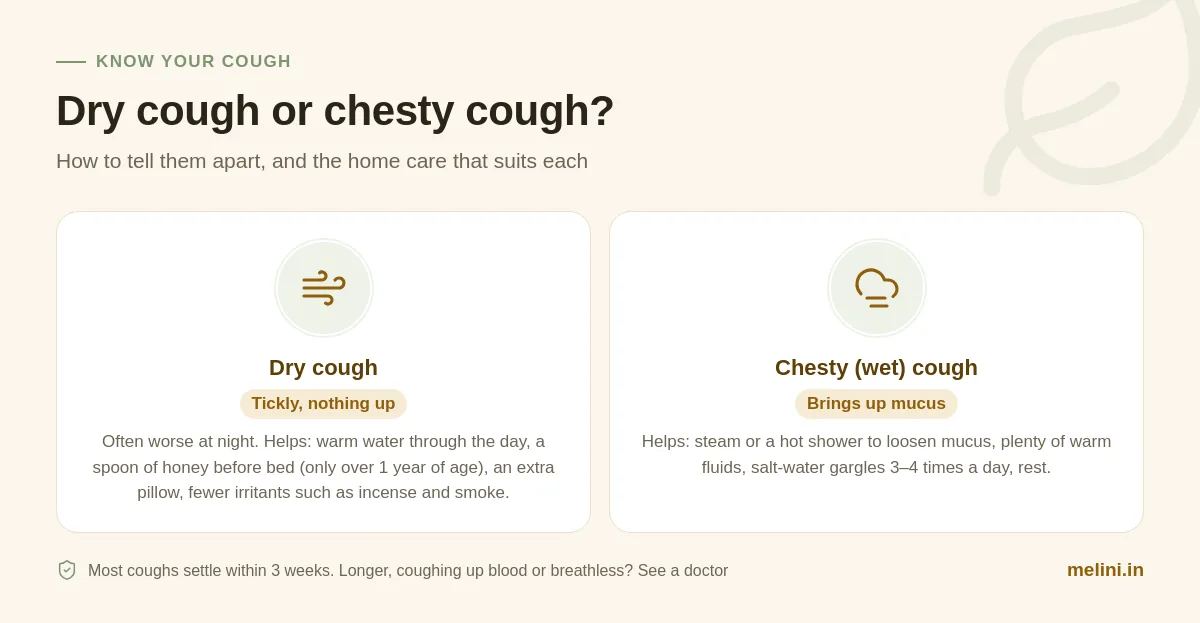
In short: a cough is the body's way of clearing the airways. Most coughs come with a cold and settle within 3 weeks. A dry cough is tickly and brings nothing up; a chesty (wet) cough brings up mucus. For both, I recommend the same basics: fluids, moist air, rest and avoiding irritants. A cough that lasts more than 3 weeks always needs a doctor.
Common causes
- Colds and other viral infections. The most common cause. The cough often lingers after other symptoms are gone.
- Dry or polluted air. Winter smog, dust, incense and mosquito-coil smoke irritate the throat and airways.
- Post-nasal drip. Mucus running down the back of the throat from a blocked nose triggers a cough, often at night.
- Smoking, including second-hand smoke.
- Acid reflux. Stomach acid rising into the throat can cause a dry cough, especially after late, heavy meals.
- Allergies to dust mites, pollen or pets.
What helps at home: step by step
- Keep your throat moist. Sip warm water through the day. Warm water with lemon, or ginger tea, can feel soothing.
- Try a spoon of honey. For adults and children over one year, a teaspoon of honey on its own or in warm water can calm a cough, especially before bed. Never give honey to babies under 12 months.
- Breathe moist air. A hot shower or a bowl of steaming water (with a towel over your head for 5 to 10 minutes) loosens mucus. Keep hot water away from children.
- Gargle with salt water. Half a teaspoon of salt in a glass of warm water, gargled 3 to 4 times a day, eases throat irritation that triggers coughing.
- Raise your head at night. An extra pillow reduces post-nasal drip and night-time coughing.
- Cut irritants at home. Avoid smoking indoors, incense, mosquito coils and strong room sprays while you are coughing. On high AQI days keep windows closed during peak hours and air the room when the air is cleaner.
- Eat dinner earlier. Finishing your evening meal 2 to 3 hours before bed reduces reflux-related coughing.
- Rest your voice and body. Talking a lot and heavy exercise can set off coughing fits. Gentle walks are fine.
- For a chesty cough, let it work. Coughing up mucus is useful. Drink enough so mucus stays thin, and spit it out rather than swallowing.
If you want to take a cough syrup, ask a pharmacist or doctor which type fits your cough. Dry-cough and chesty-cough syrups work differently, and many are not suitable for children.
Frequently Asked Questions
How long should a cough last after a cold?
Up to 3 weeks is common. If it lasts longer, see a doctor.
Why is my cough worse at night?
Lying flat lets mucus collect at the back of the throat, and bedroom air is often dry. Raise your head, keep the air moist and avoid late meals.
Is a dry cough or a wet cough more serious?
Neither is automatically more serious. What matters is how long it lasts and whether warning signs, listed below, appear.
Does turmeric milk (haldi doodh) help a cough?
Many families find a warm cup of haldi doodh comforting before bed, and warm drinks do soothe the throat. It is not a treatment, so see a doctor if the cough does not improve.
Can I go to work with a cough?
If you also have fever or feel unwell, rest at home. If you only have a lingering cough, wash your hands often and cover coughs, or wear a mask.
When to see a doctor
See a doctor if:
- the cough lasts more than 3 weeks;
- you cough up blood, or mucus that is rust-coloured;
- you feel short of breath, wheeze, or have chest pain;
- you have a high fever, night sweats or unexplained weight loss;
- you have coughing fits that end in a "whoop" or vomiting;
- you have asthma, COPD, heart disease or a weak immune system and your cough gets worse;
- the person with the cough is a baby, very young child or an older adult.
Call 112 straight away if someone is struggling to breathe or their lips turn blue.
For simple ways to make winter evenings at home calmer and cosier, see this winter evening ritual at home.
This article is general information, not medical advice. Please talk to your doctor about your own health.
Related articles




Was this article helpful?

Written by
Pete — Nourished by Pete
After struggling for more than 20 years with eczema, allergies and health challenges no doctor could fully explain, Pete found his answers in the foundations of health. Today he helps people create simple, sustainable changes that improve energy, sleep, digestion, stress resilience and overall wellbeing.