
Most people in India know eucalyptus oil as the sharp, fresh smell from a small bottle in the family cupboard. It can do a lot more around the house than most of us use it for. In this guide I keep it practical: what eucalyptus oil can be used for at home, how much to use for each job, and what to avoid.
Quick answer
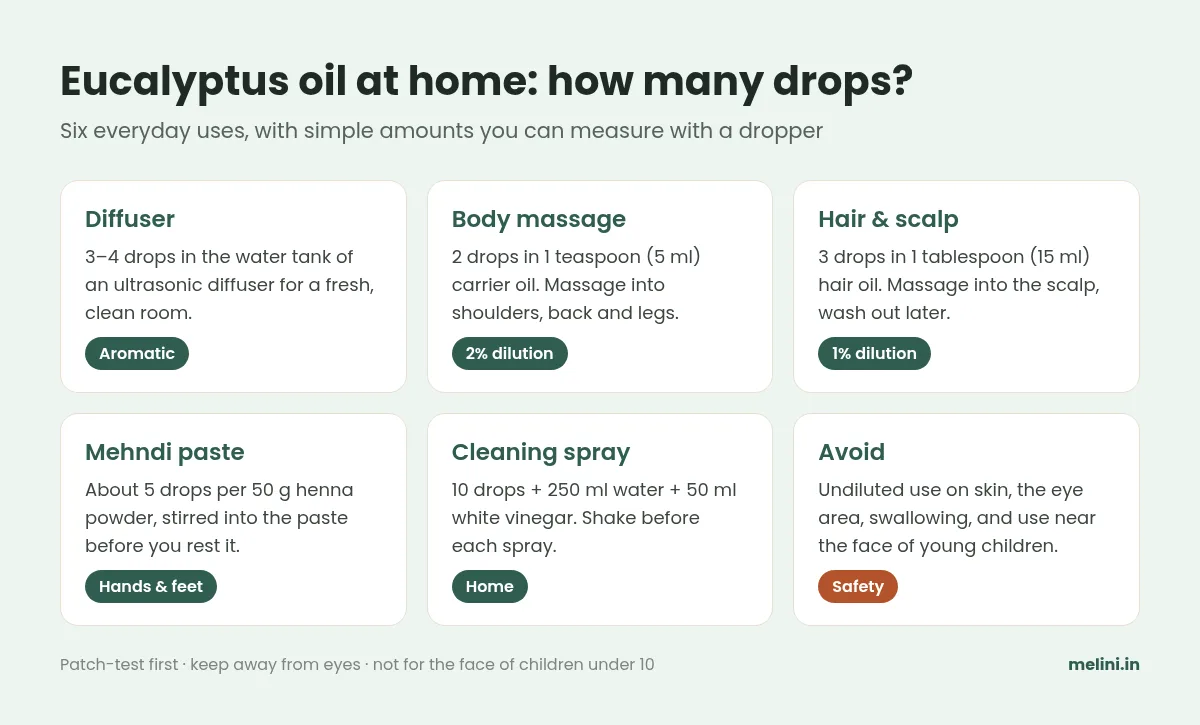
Eucalyptus oil is a fresh, camphor-like essential oil steam-distilled from eucalyptus leaves. At home you can use it in a diffuser (3–4 drops), diluted on the body for massage (2 drops per teaspoon of carrier oil), in hair oil (3 drops per tablespoon), in mehndi paste (about 5 drops per 50 g of henna) and in a homemade cleaning spray (10 drops per 250 ml of water). Never put it on skin undiluted, keep it away from the eyes, and do not use it near the face of young children.
What is eucalyptus oil?
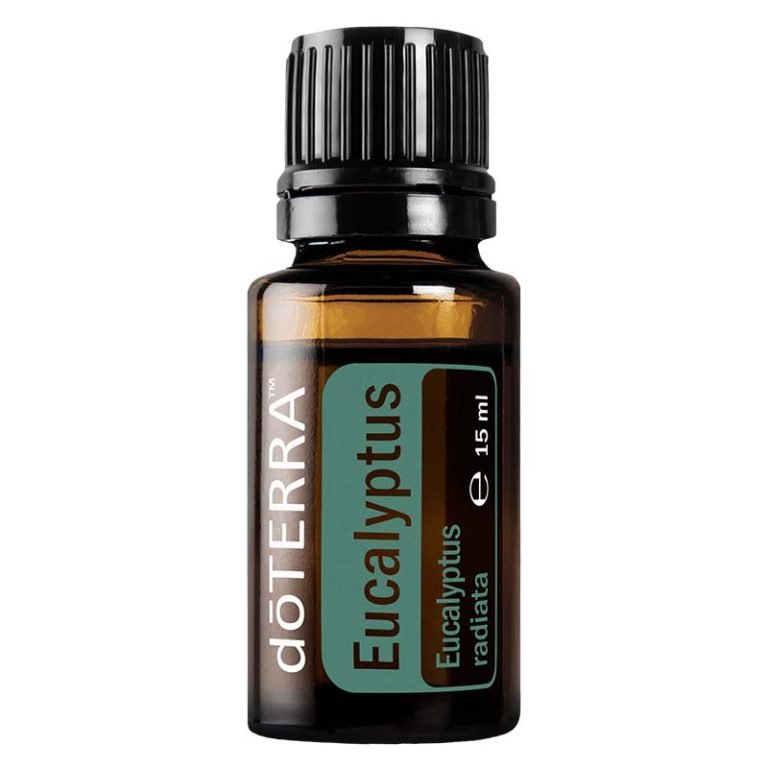
Eucalyptus oil comes from the leaves of eucalyptus trees. It is steam-distilled, which means steam carries the aromatic compounds out of the leaves and they are collected as a clear, thin oil. Its main aroma compound, 1,8-cineole (also called eucalyptol), gives it that clean, cooling, slightly medicinal smell. dōTERRA Eucalyptus is a blend of several eucalyptus species, which gives a rounder aroma than a single-species oil.
For more on the plant itself, see our eucalyptus essential oil hub.
Benefits of eucalyptus oil around the home
When people search for the benefits of eucalyptus oil, they usually mean what it adds to daily life. In plain terms:
- A fresh, clean aroma that makes a room feel aired out.
- A cooling feel on the skin when diluted in a massage oil, which many people enjoy after a long day on their feet.
- A crisp scent for hair oil that cuts through heavy coconut or mustard oil smells.
- A traditional partner for mehndi, used by many mehndi artists in the paste.
- A natural scent for homemade cleaners, instead of synthetic perfumes.
1. In a diffuser
This is the easiest way to start. Fill an ultrasonic diffuser with water to the line, add 3–4 drops of eucalyptus oil and run it for 30–60 minutes. It pairs well with Lemon for a kitchen, or with Lavender for a softer evening aroma. Read our beginner’s guide to using a diffuser if you are new to it.
2. On the skin: body massage
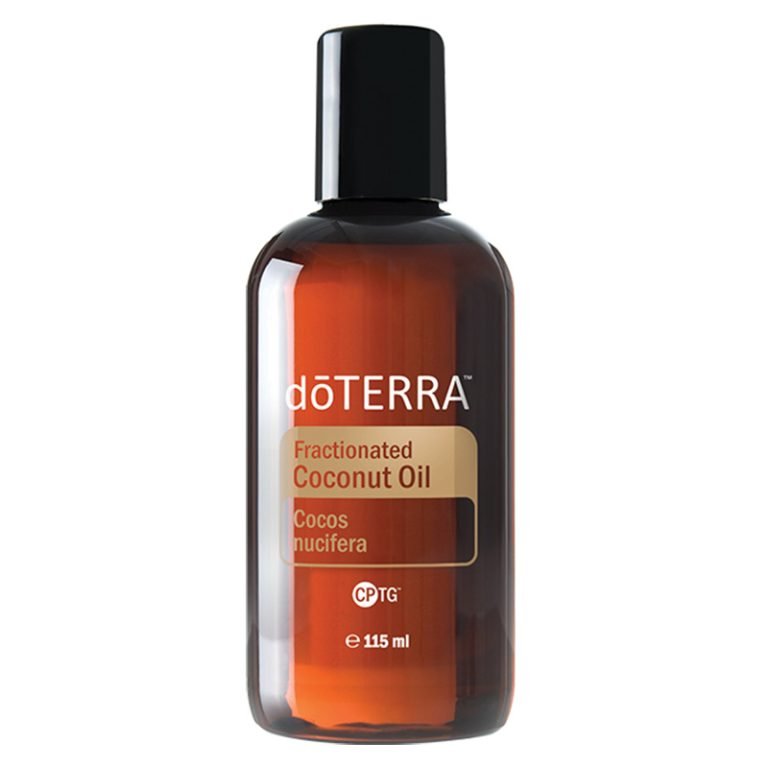
For the body, mix 2 drops of eucalyptus oil into 1 teaspoon (5 ml) of carrier oil. That gives a 2% blend. Fractionated Coconut Oil works well because it is light, does not smell and stays liquid in winter. Massage it into the shoulders, back, calves or feet. For sensitive skin, use 1 drop per teaspoon instead.
Do not apply eucalyptus oil to the face, and always do a patch test first: apply a little of the blend to the inner forearm and wait 24 hours.
3. For hair and scalp
Eucalyptus oil for hair is mainly about feel and fragrance. Add 3 drops to 1 tablespoon (15 ml) of your usual hair oil, such as coconut oil. Part your hair, apply to the scalp, massage for a few minutes and wash it out after 30 minutes or the next morning. The scalp feels fresh and the oil smells lighter. Once or twice a week is plenty.
4. Eucalyptus oil for mehndi
Many mehndi artists add a few drops of an essential oil such as eucalyptus to their henna paste, because it helps the paste work well and many people find it helps the colour develop. A simple ratio is about 5 drops of eucalyptus oil per 50 g of henna powder, stirred in when you make the paste and before you let it rest.
- Use natural henna only. Avoid “black henna”, which can contain PPD, a strong skin sensitiser.
- Use the paste on hands and feet, away from the eyes and face.
- Patch-test the finished paste if you have sensitive skin.
- For young children, skip the essential oil in the paste.
5. In a homemade cleaning spray
For a fresh-smelling all-purpose spray, mix 250 ml of water, 50 ml of white vinegar and 10 drops of eucalyptus oil in a glass or PET spray bottle. Oil does not dissolve in water, so shake well before each use. Use it on kitchen counters, tiles, sinks and bins. Test on a hidden spot first, and do not use vinegar sprays on marble or granite. For more ideas, see clean and fresh home diffuser blends.
6. Little everyday tricks
- Put 1 drop on a cotton pad inside a gym bag or shoe rack.
- Add 2 drops to a bucket of mop water for a fresh-smelling floor.
- Put 1 drop on a dryer ball or a tissue in the cupboard.
Eucalyptus or Lemon Eucalyptus?
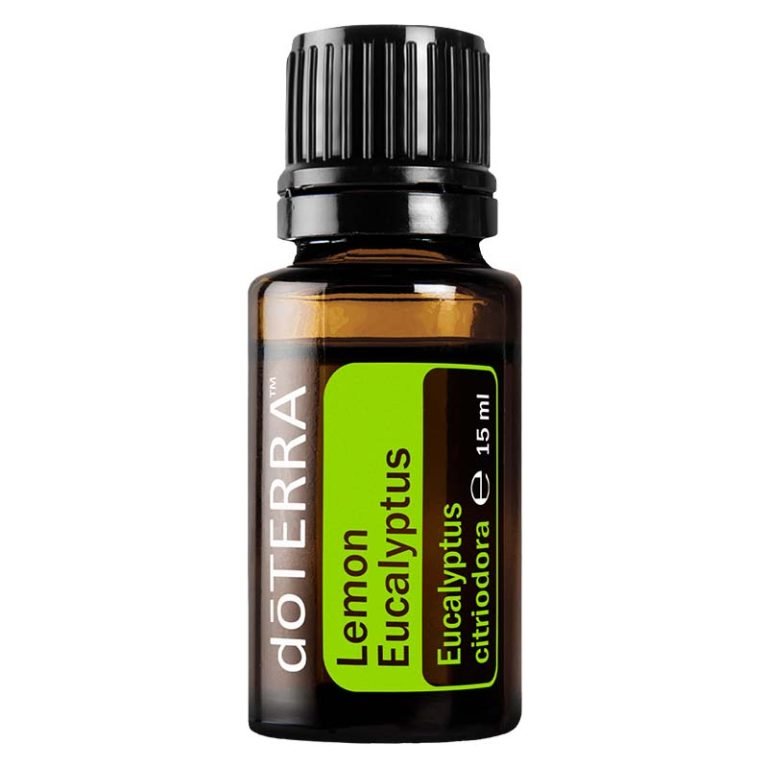
They are different oils. Eucalyptus is cool and camphor-like. Lemon Eucalyptus (Eucalyptus citriodora) smells citrusy and grassy and is often used for cleaning and outdoor-feel blends. Both follow the same dilution rules.
Safety rules for eucalyptus oil
- Always dilute before use on skin. 1–2% is enough.
- Keep it away from the eyes, inside of the nose and ears.
- Do not use it on or near the face of children under 10, and keep the bottle out of their reach.
- Do not swallow eucalyptus oil.
- If you are pregnant, breastfeeding or under medical care, ask your doctor first.
- Keep pets in mind: diffuse in an open room they can leave.
For a full chart, see our carrier oil and dilution chart.
Frequently Asked Questions
What can eucalyptus oil be used for?
At home it is used in a diffuser for a fresh aroma, diluted in massage oil and hair oil, in mehndi paste and in homemade cleaning sprays.
Can I apply eucalyptus oil directly on my skin?
No. Mix it with a carrier oil first: 2 drops per teaspoon for the body. Do not use it on the face.
How do I use eucalyptus oil for hair?
Add 3 drops to 1 tablespoon of hair oil, massage into the scalp, and wash out after 30 minutes or the next morning. Once or twice a week is enough.
How much eucalyptus oil should I add to mehndi?
About 5 drops per 50 g of henna powder, mixed in when you prepare the paste. Use natural henna only.
Is eucalyptus oil safe for children?
Do not use it on or near the face of children under 10, and keep the bottle out of reach. Ask your doctor before any use with young children.
Disclaimer: This information is for educational purposes only and is not medical advice. Consult a healthcare professional before using essential oils if you are pregnant, breastfeeding or under medical care. dōTERRA products are not intended to diagnose, treat, cure, or prevent any disease.
Recommended Products
Related articles
Sandalwood Oil for Skin and Face: How to Use It Gently
Lavender Oil for Skin and Hair: How to Use It
How to Use Rosemary Oil for Hair: Drops, Dilution & Routine
Carrier Oil for Tea Tree Oil (plus Rosemary, Peppermint and Eucalyptus): Dilution Chart
Was this article helpful?

Written by
Pete — Nourished by Pete
After struggling for more than 20 years with eczema, allergies and health challenges no doctor could fully explain, Pete found his answers in the foundations of health. Today he helps people create simple, sustainable changes that improve energy, sleep, digestion, stress resilience and overall wellbeing.